Reactive Dog Training in San Diego
Looking for the best reactive dog training in San Diego, CA? Here’s what you get with Pawcific Dog Academy.
- A calm dog and stress-free walks
- No more barking and lunging
- The freedom to take your dog anywhere
- Lifetime support and guidance
Click the button below and fill out a quick form to get started with a free consultation ↓
Check Out Our Reviews
Reactive Behaviors We Fix in San Diego
Reactivity usually starts with fear or frustration. We teach your dog a calmer way to respond.
Life Before and After Reactivity Training
This is the difference our San Diego clients notice most.
Life right now
- You cross the street every time a dog appears
- Walks happen at 5 AM or late at night
- The beach and Balboa Park feel off limits
- Your arm aches from bracing on the leash
- You feel judged by neighbors
Life after training
- You pass other dogs on the same sidewalk
- Walks happen whenever it suits you
- Beach paths and park trails are back on the list
- A loose leash and a relaxed grip
- Pride instead of embarrassment on walks
San Diego Owners Trust Us With Reactive Dogs
Reactivity is one of our specialties. We started in Pacific Beach, so we train around the exact triggers San Diego dogs face, from crowded boardwalks to apartment hallways and busy brewery patios.
How Reactive Dog Training Works
We begin at a distance where your dog can still think, then build focus, heel and settle skills before moving closer to triggers. Calm choices earn rewards, and your dog’s emotional response to triggers starts to change.
You can train in-home, through board and train at our Pacific Beach facility or in our small-group Reactive Rover class.
Is Your Dog Reactive or Aggressive?
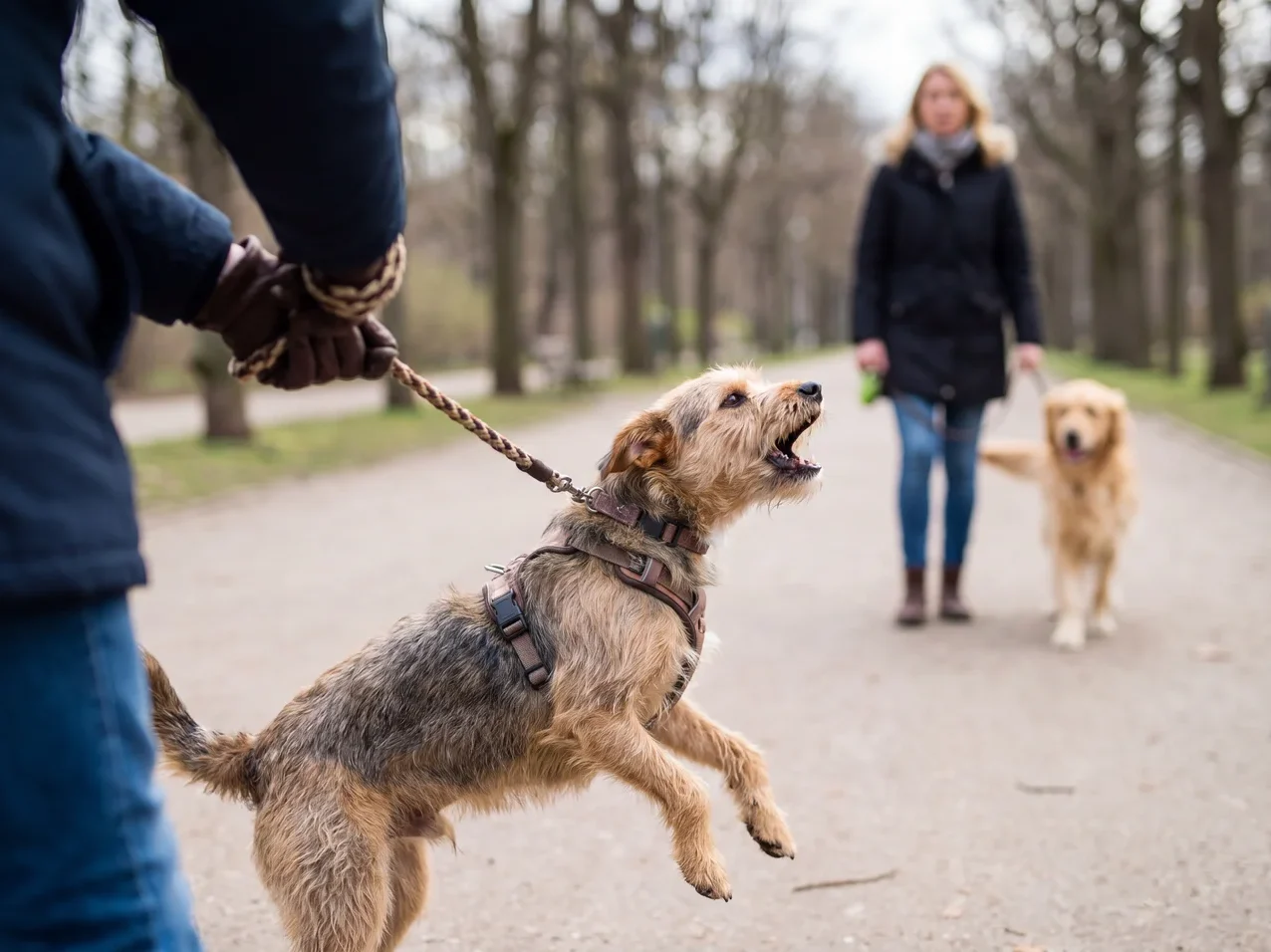
Reactive dogs overreact to triggers like dogs, people or bikes, usually from fear, frustration or overexcitement. Many are friendly off leash but explode on it.
Reactivity often shows up as dogs mature, between about one and three years old. If you’re unsure whether your dog is reactive or aggressive, we’ll tell you at the consultation.
Calm, Step-by-Step Reactivity Training
Positive reinforcement and clear structure change how your dog feels about triggers instead of suppressing the reaction. We never use harsh corrections, which tend to make reactivity worse.
You learn to read your dog’s body language and create space before a reaction starts.
From Lunging to Loose Leash
Four stages that rebuild your walks from the ground up.
Free consultation
We watch how your dog reacts and pick in-home, board and train or Reactive Rover.
Foundation skills
Focus, heel, place and settle, taught far from triggers.
Closer to the real world
Sidewalks, parks and busier places as your dog shows it’s ready.
Walking with other dogs
Carefully managed walks alongside calm dogs to lock in progress.
What’s Included in Reactive Dog Training
Support that goes with you on every walk.
- A reactivity assessment and custom plan
- Private training, board and train or Reactive Rover
- Real-world practice on San Diego routes
- Coaching so you can handle triggers yourself
- Lifetime support whenever you need it
Our Promise to Reactive Dog Owners
Progress with reactivity is a journey, and you won’t walk it alone.
Lifetime Support
A new trigger after a move or a setback after the holidays? We help for the life of your dog, no charge.
Guaranteed Results
Finish the program as designed and you’ll see meaningful change on walks. If not, our trainers keep going with you.
Why Dogs Become Reactive
Reactivity has clear causes, and understanding them makes progress much faster.
Common Root Causes
Genetics, limited socialization as a puppy, a scary experience and plain frustration on the leash all play a part. Many reactive dogs simply want to reach something and can’t, and the leash turns that frustration into barking and lunging.
Knowing which of these applies to your dog changes how we set up each session.
Understanding Threshold
Every reactive dog has a distance where it notices a trigger but can still think. Closer than that, learning shuts down.
Training starts outside that line and moves closer only as your dog stays relaxed. Stress from earlier in the day can shrink that distance, so a calm morning sets up a better walk.
Management Between Sessions
Each outburst practices the habit. Choose quieter routes, use parked cars as visual barriers and learn a quick U-turn.
At home, frosted window film can stop balcony or window fixation while training is underway.
How We Desensitize Triggers
We pair the sight of a trigger with something your dog loves, at a distance it can handle. Over many repetitions, a passing dog starts to predict good things instead of danger. This is how the emotion changes, not just the behavior.
Exercise That Lowers Stress
Sniff walks in quiet places, food puzzles and short training games give reactive dogs an outlet without the pressure of a busy street. A dog that gets these calm outlets is often less on edge when it does meet a trigger.
Mistakes That Keep Reactivity Going
A tight leash tells your dog something is wrong. Forced greetings and crowded dog parks push a reactive dog past its limit. Expecting a straight line of progress leads to frustration, because good weeks and harder weeks are part of the process.
Pawcific Dog Academy helps San Diego families plan for the bumps so a rough day never undoes real progress.
Reading Your Dog’s Body Language
Reactions rarely come out of nowhere. Stiffening, a closed mouth, ears pinned forward and a hard stare usually show up seconds before the bark. Catching those early signs gives you time to add distance or ask for focus before your dog boils over.
Learning to spot them is one of the most useful skills you’ll take away from training.
Reactive Dog Training Throughout San Diego
We help reactive dogs from Pacific Beach and North Park to La Jolla, Coronado, Chula Vista, Carlsbad, Encinitas and Escondido. See the full San Diego service area.
Frequently Asked Questions
Can reactivity be trained out of a dog?
For most dogs, reactivity improves a lot with the right training. Many dogs become calm on walks, and even complex cases become far more manageable.
How long until my dog’s reactivity improves?
Many dogs improve noticeably within four to six weeks, while complex cases take several months. Consistent practice speeds things up.
Should I get a dog trainer for my reactive dog?
Yes. Reactivity often gets worse when it’s handled by trial and error, and a trainer helps you avoid setbacks and practice safely.
What does reactive dog training cost in San Diego?
It depends on your dog and the format you choose. Reactive Rover classes cost less than private or board and train programs. You’ll get an exact price at the consultation.
What is Reactive Rover?
Our small-group class for leash-reactive dogs, where dogs practice calm behavior around other dogs at a safe distance.
Do you take reactive dogs for board and train?
Yes. Reactive dogs train every day at our Pacific Beach facility, with real-world practice built in.
Take Back Your Walks in San Diego
Book your free consultation and we’ll show you the fastest path to calm walks.